

A better job in another state can come with a higher salary. A family with a young child still has to factor in one more thing before packing up the house: who will take care of the child after the move?
In the U.S., several programs can reduce child care costs to a very small amount or even zero. The problem for a family considering a move is that availability and rules depend on the program, income, the child’s age, and where the family lives.
A family can therefore be financially tied to a particular city or state much more than home prices alone would suggest. A free spot in a program can be worth several thousand dollars over the course of a year.
In this report
What options for free or lower-cost child care exist in the U.S.?

American families do not have one universal program that covers all children. Several major assistance systems exist, and each has its own rules.
Before moving, it therefore makes sense to check what assistance the family currently uses and what would be available at the new address.
Let’s see which programs are available.
| Program | Who it is for | Age | What a family may pay |
| Head Start | Families that meet income or other eligibility rules | Usually ages 3–5 | Free |
| Early Head Start | Pregnant women, babies, and young children in eligible families | Under age 3 | Free |
| Child Care Subsidies / Vouchers | Families that meet their state’s rules | Varies by state | From a small copay to nearly zero |
| State-Funded Pre-K | Preschool-age children | Usually ages 3–5 | Free or subsidized |
| Military Child Care Assistance | Eligible military families | Varies by program | Subsidized |
Programs have different rules by state and place of residence. Current options can be checked through the federal overview of financial assistance for child care.
Head Start can completely remove the bill for a family
Head Start covers preschool children, while Early Head Start includes babies and children up to age three.
The program is free for families that meet the required eligibility rules. Household income plays a major role, and special rules apply to certain categories of children and families.
The biggest obstacle is often the availability of spots. Programs operate locally, so moving means submitting a new application with a different provider. A family that has a guaranteed spot today cannot assume it will automatically receive the same spot after moving to another state.
Early Head Start exists for the youngest children
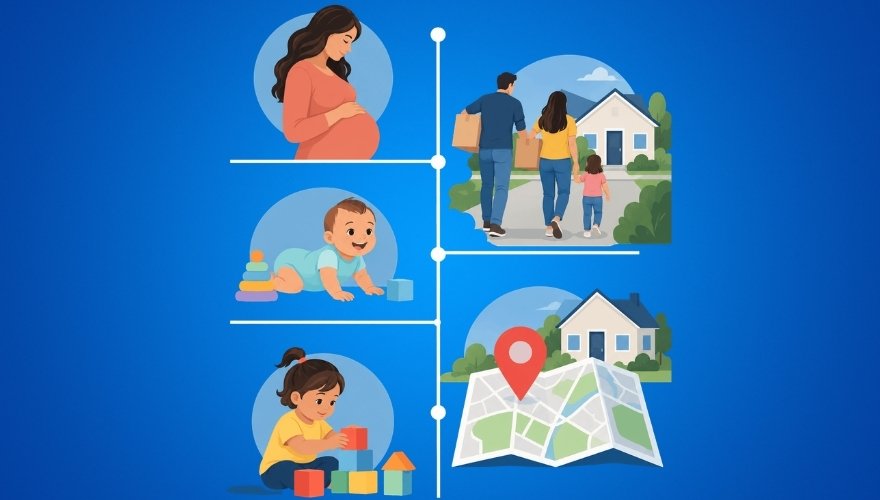
Early Head Start is intended for pregnant women, babies, and children under age three from families that meet program requirements. A free spot can therefore remove one of the largest early costs of parenthood.
Child Care Subsidies / Vouchers can reduce the bill to almost zero
State subsidies are another major form of assistance.
The state covers part of the cost, and the parent usually pays a certain copay. The amount depends on income, family size, and local rules.
A family that currently pays $150 a month could pay much more after moving to another state if it no longer qualifies for the same level of subsidy. For example, if the new bill rises to $1,000 a month, the annual difference is $10,200.
A higher salary can affect a Child Care Subsidy
Income thresholds create another problem. A new job offer can raise a salary enough for the family to cross the limit for a certain level of assistance. Such a change especially affects families with two young children. Two subsidized spots can represent a financial benefit worth several thousand dollars a year, so a change in eligibility after a move can affect both bills. That is why a salary comparison gives an incomplete result without checking child care costs at the new address.
State-Funded Pre-K depends on where the family lives
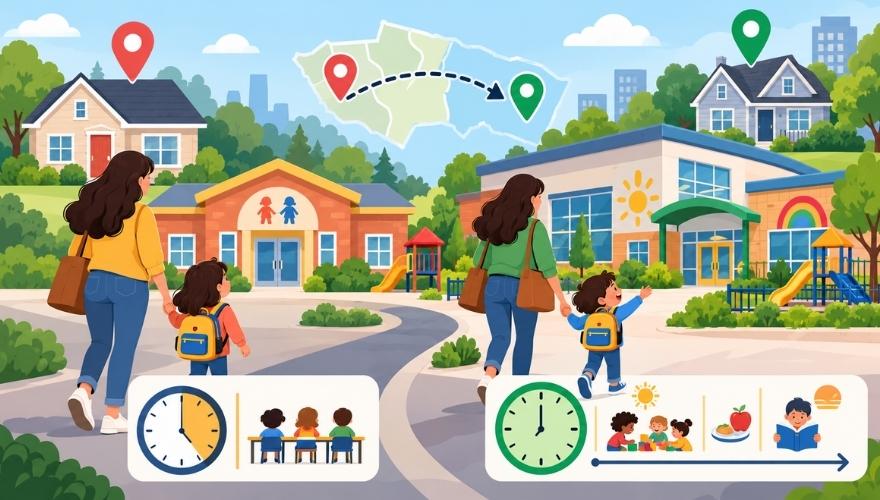
State-Funded Pre-K can remove a large share of the cost once a child reaches preschool age.
A free program that lasts only a few hours a day may still require additional paid care. A full-day program can cover almost the entire workday for a parent.
A parent who works from 8 a.m. to 5 p.m. does not get the same benefit from a four-hour program as from a full-day one. With a shorter program, the family still needs an additional child care arrangement before or after Pre-K.
That is why a family should check how many hours the new program covers before moving, not just if free Pre-K exists.
Military Child Care Assistance exists for military families
Military families can use child care programs on bases or receive assistance for approved civilian providers. Additional options can also reduce the cost, including certain tax benefits for dependent care.
Military Child Care Assistance has a special place in the system because a change in duty station often also means a new child care arrangement.
Free help from a grandparent can be worth even more

Formal programs are not the only reason a family may stay in the same city.
A retired grandparent often provides a much more flexible option.
During 2025, 69% of American grandparents provided some form of care for their grandchildren, and 15% did so every day or almost every day. Such help can mean picking a child up from daycare, providing a few hours of care during the workweek, or helping when the child is sick.
A retired parent has another advantage: they can help outside standard daycare hours. That is why a grandparent who lives nearby can directly affect a decision about moving.
Conclusion
Free or very low-cost child care in the U.S. often depends on where a family lives. A new job offer therefore has its full financial value only when the family knows how much child care will cost at the new address, and for some families, that bill determines where they will live for the next several years.
Data and methodology
Household Figures uses current federal information on the Head Start program, Early Head Start program, Child Care Subsidies / Vouchers, State-Funded Pre-K options, and assistance for military families.
Program rules vary by state, income, the child’s age, and the availability of spots.
Data on help from grandparents is based on national research published during 2026.
The monthly and annual amounts in the article are illustrative calculations. Actual costs depend on where the family lives and the type of child care service.